Evaluation
The evaluation team conducts structured and systematic evaluation of development projects to assess performance, efficiency, and achievement of intended results. Evaluation is integrated across the PC-I to PC-V lifecycle and is operationalized primarily at the PC-IV stage, where completion evaluation verifies the extent to which approved objectives, outputs, and outcomes defined at PC-I have been achieved. Economic and financial efficiency is analyzed through indicators such as Benefit-Cost Ratio (BCR), Internal Rate of Return (IRR), Net Present Value (NPV), and performance indices to ensure value for money and effective utilization of development resources.
Multiple evaluation approaches are applied, including formative evaluation for course correction, mid-term review for progress assessment, summative evaluation for outcome verification, and real-time evaluation supported by digital dashboards and performance data. Evaluation findings are digitized and integrated into decision-support systems to inform planning improvement, policy refinement, and institutional learning. By linking evaluation evidence with Results-Based Management indicators and lifecycle performance monitoring, The Ministry strengthens transparency, accountability, and evidence-based governance, ensuring that development investments achieve measurable results and contribute to sustained national impact.
Evaluation Objectives
- Assess relevance, efficiency, and effectiveness of development interventions
- Determine achievement of project objectives and outcomes
- Evaluate cost-benefit and economic efficiency of investments
- Identify implementation constraints and systemic weaknesses
- Strengthen transparency, accountability, and institutional learning
Institutionalized Approaches
- Formative evaluations to refine ongoing initiatives
- Mid-term reviews to assess progress and recommend course correction
- Cost-benefit and economic efficiency evaluations for major projects
- Earned value-based performance evaluation using CPI and SPI indicators
- Summative evaluations assessing outcomes and sustainability
- Real-time and rolling evaluations supported by digital dashboards
- Impact evaluations using mixed-method approaches
Lifecycle Evaluation Mapping
Completion Evaluation
Assessment of scope, cost, schedule, outputs, and outcome performance at project completion.
Post-Completion Evaluation
Annual assessment of operational performance and sustainability for five years following closure.
Institutional Evaluation System
Projects Selected for Evaluation
PC-IV Submitted
Projects with completed PC-IV forms submitted by Ministries/Divisions
Strategic Projects
Projects of strategic nature assigned by CDWP/ECNEC and PM directives
Long-term Projects
Projects having 3+ years of implementation periods for mid-term evaluation
Large-scale Projects
Projects having capital cost Rs. 3 billion and above
Institutional Responsibilities
- Oversight by I&M Office at national level.
- Decentralized evaluations by ministries and provincial departments.
- Independent review by academia and expert panels.
- Centralized digital submission of evaluation reports.
- Mandatory submission of PC-IV within 60 days of completion.
- Annual submission of PC-V for five years following closure.
Evaluation Contributions
- Policy learning and institutional improvement.
- Evidence-based planning and adaptive governance.
- Strengthening sustainability and operational continuity.
- Enhancing public accountability and transparency.
- Participatory evaluation engages civil society, academia, and stakeholders to improve credibility, learning, and governance outcomes.
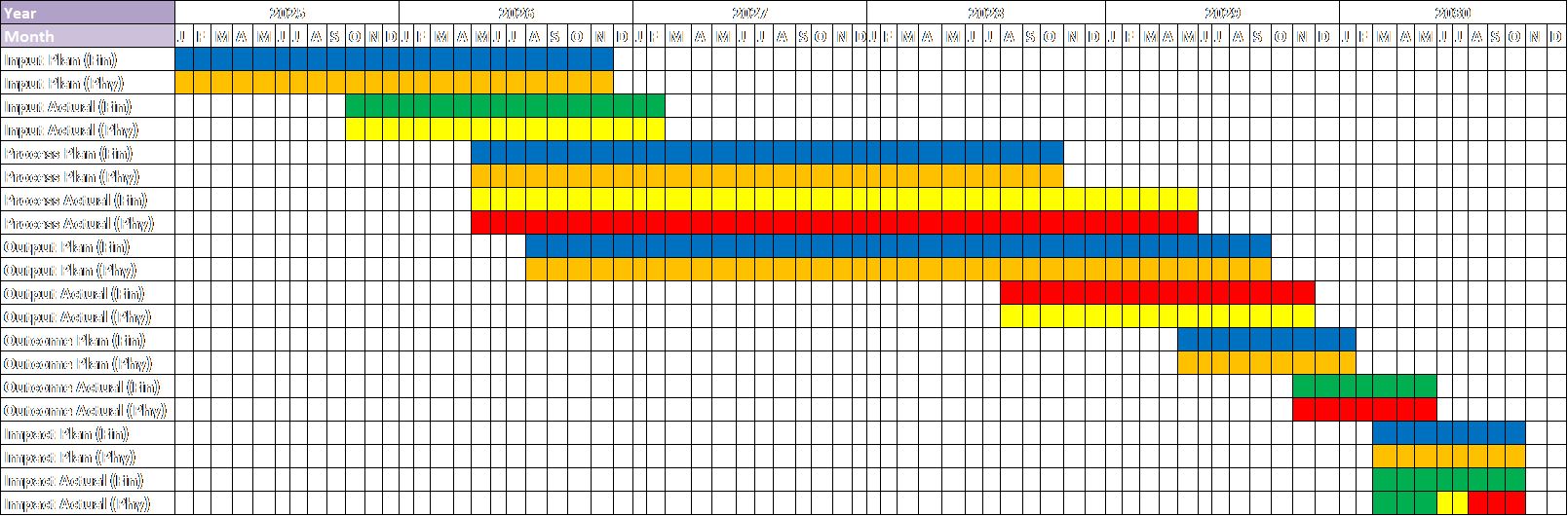
Evaluation Timeline