
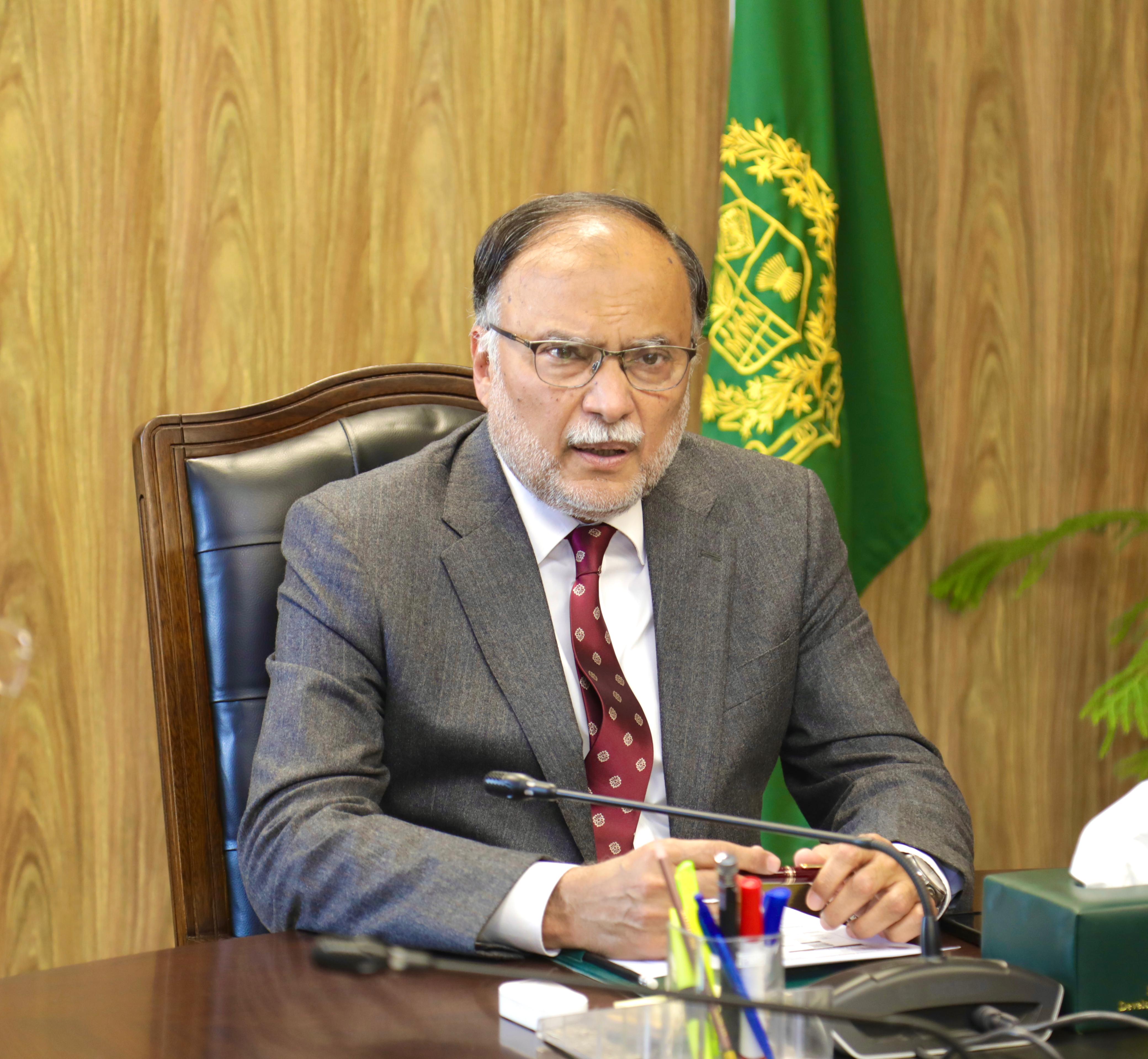
In a high-level meeting at the Ministry of Planning, chaired by Deputy Chairman Planning Commission Ahsan Iqbal, ongoing development projects under the Ministry were thoroughly reviewed. The meeting was also attended by Parliamentary Secretary for Planning Wajiha Akram. During the meeting, Ahsan Iqbal emphasized the government's commitment to fully digitalize the Ministry of Planning within the next year. He stressed the importance of adapting to the modern era by promoting digitalization, which is crucial for ensuring transparency, preventing resource wastage, and improving governance. “We must focus on bringing the entire ministry’s operations online within a year,” stated Iqbal. “Digitalization will ensure better governance and transparency, while also eliminating inefficiencies that lead to resource wastage.”
To further enhance the performance of the Ministry's ongoing projects, Ahsan Iqbal advocated for the inclusion of private sector consultants. He highlighted that the expertise of the private sector will be instrumental in improving project management and execution. Iqbal also called for a critical review of ongoing projects, advising that projects which do not contribute to governmental efficiency should be terminated. He stressed the need for a more efficient and modernized approach to project planning and approval processes. “When approving new projects, their practical implications and expected outcomes must be thoroughly assessed. Ministries need to move beyond mere project initiation and focus on successful completion,” he added.
He also provided strategic directives for the improvement of the Intelligent Project Automation System (iPAS) under the Ministry of Planning. The minister maintained that iPAS has to evolve as the comprehensive project management tool and ensure the highest level of efficiency in this key initiative.
As the government prepares for the next Public Sector Development Program (PSDP), Iqbal underscored the importance of determining the availability of resources for projects initiated by various ministries. He reminded all ministries to ensure that new projects are conceived within their allocated budgets. “The project directors must take responsibility for hiring project staff, and every ministry must ensure that its projects are financially viable,” stated Iqbal. He also stressed the critical role that Pakistan Institute of Development Economics (PIDE) will play in supporting the government’s economic agenda, specifically through its research on economic growth, governance improvements, and new project proposals. PIDE is to serve as an economic think tank for the government, supporting the creation of sustainable projects that foster growth.
Addressing the importance of the China-Pakistan Economic Corridor (CPEC), Ahsan Iqbal highlighted that $25 billion in investment has already been made under CPEC, and he tasked PIDE with assessing the benefits of this investment on Pakistan's economic and business sectors. “The CPEC Center of Excellence must be merged with PIDE at the earliest opportunity to ensure that we leverage our academic and research capabilities to track the benefits of the $25 billion investment,” he said.
Ahsan Iqbal also emphasized that PIDE’s research should visibly benefit stakeholders across federal ministries and government institutions. The development of PhD professionals to serve the public sector is a fundamental responsibility of PIDE, and all federal ministries are its primary stakeholders. “PIDE’s research must provide tangible benefits to its stakeholders. We need to strengthen our governance frameworks through evidence-based research,” he concluded. This meeting marks a critical step toward ensuring that Pakistan’s development strategies are firmly rooted in transparency, digitalization, and effective resource management, as the country looks toward a future of enhanced governance and economic growth.
To further enhance the performance of the Ministry's ongoing projects, Ahsan Iqbal advocated for the inclusion of private sector consultants. He highlighted that the expertise of the private sector will be instrumental in improving project management and execution. Iqbal also called for a critical review of ongoing projects, advising that projects which do not contribute to governmental efficiency should be terminated. He stressed the need for a more efficient and modernized approach to project planning and approval processes. “When approving new projects, their practical implications and expected outcomes must be thoroughly assessed. Ministries need to move beyond mere project initiation and focus on successful completion,” he added.
He also provided strategic directives for the improvement of the Intelligent Project Automation System (iPAS) under the Ministry of Planning. The minister maintained that iPAS has to evolve as the comprehensive project management tool and ensure the highest level of efficiency in this key initiative.
As the government prepares for the next Public Sector Development Program (PSDP), Iqbal underscored the importance of determining the availability of resources for projects initiated by various ministries. He reminded all ministries to ensure that new projects are conceived within their allocated budgets. “The project directors must take responsibility for hiring project staff, and every ministry must ensure that its projects are financially viable,” stated Iqbal. He also stressed the critical role that Pakistan Institute of Development Economics (PIDE) will play in supporting the government’s economic agenda, specifically through its research on economic growth, governance improvements, and new project proposals. PIDE is to serve as an economic think tank for the government, supporting the creation of sustainable projects that foster growth.
Addressing the importance of the China-Pakistan Economic Corridor (CPEC), Ahsan Iqbal highlighted that $25 billion in investment has already been made under CPEC, and he tasked PIDE with assessing the benefits of this investment on Pakistan's economic and business sectors. “The CPEC Center of Excellence must be merged with PIDE at the earliest opportunity to ensure that we leverage our academic and research capabilities to track the benefits of the $25 billion investment,” he said.
Ahsan Iqbal also emphasized that PIDE’s research should visibly benefit stakeholders across federal ministries and government institutions. The development of PhD professionals to serve the public sector is a fundamental responsibility of PIDE, and all federal ministries are its primary stakeholders. “PIDE’s research must provide tangible benefits to its stakeholders. We need to strengthen our governance frameworks through evidence-based research,” he concluded. This meeting marks a critical step toward ensuring that Pakistan’s development strategies are firmly rooted in transparency, digitalization, and effective resource management, as the country looks toward a future of enhanced governance and economic growth.