
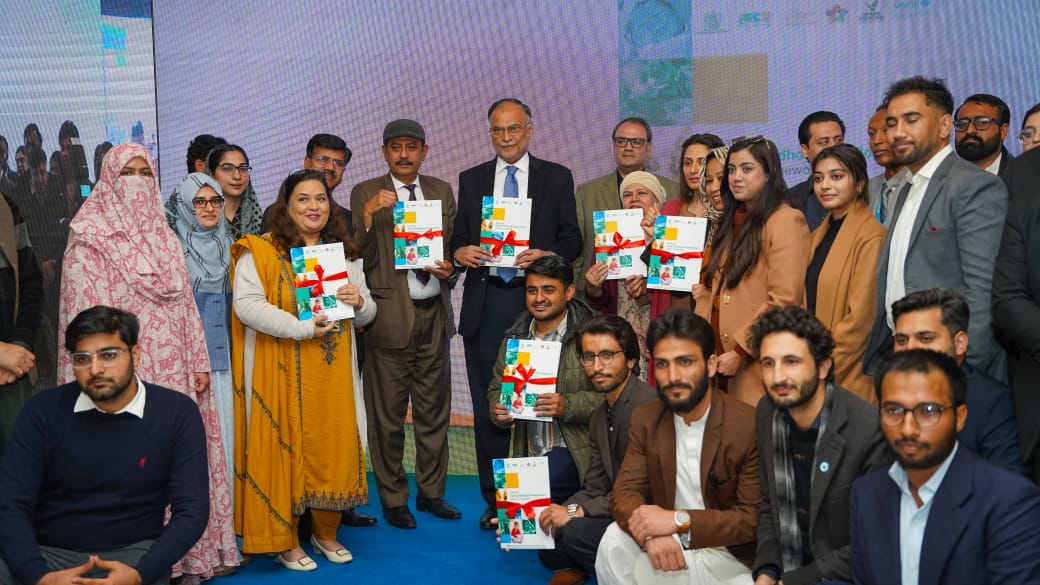
Federal Minister for Planning, Development, and Special Initiatives Ahsan Iqbal Launches National Early Childhood Development (ECD) Policy Framework & Pakistan SUN Youth Network (SYN)
February 20, 2025
Islamabad: The Ministry of Planning, Development & Special Initiatives (MoPDSI), in collaboration with United Nations Children's Fund (UNICEF), successfully launched the National Early Childhood Development (ECD) Policy Framework and the Pakistan SUN Youth Network (SYN) at a landmark event in Islamabad. The event brought together government leaders, development partners, youth representatives, and international experts to reinforce Pakistan’s commitment to child development, nutrition, and youth engagement in policy advocacy.
In the opening remarks, Ms. Nadia Rehman, Member Food Security & Climate Change, Planning Commission, emphasized the critical importance of early childhood development, highlighting that eighty percent of brain development occurs within the first 1,000 days of a child’s life. She stressed that the challenge of stunting is not only a physical issue, but also one of cognitive impairment. She highlighted that over forty percent of children under five suffer from stunted growth in Pakistan, and the level of stunting has largely remained the same over the last three decades.
Addressing this challenge requires a convergence of efforts across multiple sectors. She pointed out that the new ECD Policy Framework represents a needed paradigm shift towards prevention. She underscored the urgent need for greater convergence between sectors, including health, education, nutrition, and social protection, to ensure responsive care, a safe environment, and sustainable child development.
The event featured a keynote address by Professor Ahsan Iqbal, Federal Minister for Planning, Development, and Special Initiatives, who reaffirmed the government’s dedication to investing in nutrition as a key pillar of human capital development. "The Government of Pakistan recognizes that investing in early childhood nutrition is fundamental for building human capital, enhancing economic productivity, and ensuring national progress. Under the Uraan Pakistan - National Economic Transformation Plan, nutrition has been identified as a priority, aligning with the World Health Assembly (WHA) nutrition targets and the Sustainable Development Goals (SDGs)."
Prof. Ahsan Iqbal emphasized that overpopulation is a key factor contributing to childhood stunting and malnutrition. With Pakistan projected to become the world’s fourth most populous country by 2047, he stressed the need for holistic development policies to ensure that population growth does not outpace resources. He also added that by 2047, we aspire to be among the world’s top 10 economies and become a three trillion-dollar economy. Investing in human capital through nutrition, education, and youth empowerment is fundamental to achieving this goal."
Professor Ahsan Iqbal also underscored that Pakistan’s development has been hindered by political instability and lack of policy continuity, stating, "No country can achieve sustained development without a long-term plan and stable Unfortunately, frequent political disruptions and policy shifts have held us back from realizing our true economic potential." policies. He urged the need for policy continuation for at least a decade.
Dr. Nazeer Ahmed, Chief Nutrition, MoPDSI, provided key insights into the National ECD Policy Framework, emphasizing that nutrition is the foundation of development. The ECD Policy Framework is built on eleven core objectives that aim to ensure a strong foundation for childhood development. However, to implement this successfully, we need sustainable financing from public, private, and all relevant sectors. He also highlighted that youth engagement in policy is essential for driving sustainable development, stressing that the launch of the 7th SUN Youth Network (SYN-Pakistan) marks a significant milestone in empowering young leaders to contribute meaningfully to nutrition advocacy along with insights from esteemed national and international experts.
Ms. Sharmeela Rasool, Deputy Representative from UNICEF stressed that developing countries need to be very ambitious in chasing their visions and also highlighted how 5 E’s of Uraan Pakistan should be interlinked with ECD and also highlighted that convergence approach is the only way.
Dr. Professor Aisha Yousafzai from Harvard University presented the salient features of the ECD Policy Framework, emphasizing the need for policy coherence and multi-sectoral collaboration.
Speaking on the role of young people in nutrition policy, Ms. Farrah Naz, Country Director, GAIN, highlighted the lack of structured mechanisms to systematically integrate youth perspectives into food systems and nutrition governance. She said "Young people bring fresh ideas and bold solutions, but their voices remain largely missing from discussions on food systems and nutrition. We need to create structured platforms that ensure their meaningful participation in shaping sustainable policies.”
Mr. Faiz Rasool (Head of Policy & Advocacy, GAIN) stressed the importance of engaging youth in food systems and nutrition, emphasizing that youth-led advocacy and action are crucial in shaping sustainable food policies. He highlighted the need for youth empowerment programs that equip young people with the skills and platforms to drive in meaningful change in food security and nutrition governance.
The launch featured impactful speeches from youth leaders and also brought together representatives from federal and provincial governments, development partners, and key stakeholders in child development and nutrition to reinforce a collaborative approach toward sustainable solutions.
February 20, 2025
Islamabad: The Ministry of Planning, Development & Special Initiatives (MoPDSI), in collaboration with United Nations Children's Fund (UNICEF), successfully launched the National Early Childhood Development (ECD) Policy Framework and the Pakistan SUN Youth Network (SYN) at a landmark event in Islamabad. The event brought together government leaders, development partners, youth representatives, and international experts to reinforce Pakistan’s commitment to child development, nutrition, and youth engagement in policy advocacy.
In the opening remarks, Ms. Nadia Rehman, Member Food Security & Climate Change, Planning Commission, emphasized the critical importance of early childhood development, highlighting that eighty percent of brain development occurs within the first 1,000 days of a child’s life. She stressed that the challenge of stunting is not only a physical issue, but also one of cognitive impairment. She highlighted that over forty percent of children under five suffer from stunted growth in Pakistan, and the level of stunting has largely remained the same over the last three decades.
Addressing this challenge requires a convergence of efforts across multiple sectors. She pointed out that the new ECD Policy Framework represents a needed paradigm shift towards prevention. She underscored the urgent need for greater convergence between sectors, including health, education, nutrition, and social protection, to ensure responsive care, a safe environment, and sustainable child development.
The event featured a keynote address by Professor Ahsan Iqbal, Federal Minister for Planning, Development, and Special Initiatives, who reaffirmed the government’s dedication to investing in nutrition as a key pillar of human capital development. "The Government of Pakistan recognizes that investing in early childhood nutrition is fundamental for building human capital, enhancing economic productivity, and ensuring national progress. Under the Uraan Pakistan - National Economic Transformation Plan, nutrition has been identified as a priority, aligning with the World Health Assembly (WHA) nutrition targets and the Sustainable Development Goals (SDGs)."
Prof. Ahsan Iqbal emphasized that overpopulation is a key factor contributing to childhood stunting and malnutrition. With Pakistan projected to become the world’s fourth most populous country by 2047, he stressed the need for holistic development policies to ensure that population growth does not outpace resources. He also added that by 2047, we aspire to be among the world’s top 10 economies and become a three trillion-dollar economy. Investing in human capital through nutrition, education, and youth empowerment is fundamental to achieving this goal."
Professor Ahsan Iqbal also underscored that Pakistan’s development has been hindered by political instability and lack of policy continuity, stating, "No country can achieve sustained development without a long-term plan and stable Unfortunately, frequent political disruptions and policy shifts have held us back from realizing our true economic potential." policies. He urged the need for policy continuation for at least a decade.
Dr. Nazeer Ahmed, Chief Nutrition, MoPDSI, provided key insights into the National ECD Policy Framework, emphasizing that nutrition is the foundation of development. The ECD Policy Framework is built on eleven core objectives that aim to ensure a strong foundation for childhood development. However, to implement this successfully, we need sustainable financing from public, private, and all relevant sectors. He also highlighted that youth engagement in policy is essential for driving sustainable development, stressing that the launch of the 7th SUN Youth Network (SYN-Pakistan) marks a significant milestone in empowering young leaders to contribute meaningfully to nutrition advocacy along with insights from esteemed national and international experts.
Ms. Sharmeela Rasool, Deputy Representative from UNICEF stressed that developing countries need to be very ambitious in chasing their visions and also highlighted how 5 E’s of Uraan Pakistan should be interlinked with ECD and also highlighted that convergence approach is the only way.
Dr. Professor Aisha Yousafzai from Harvard University presented the salient features of the ECD Policy Framework, emphasizing the need for policy coherence and multi-sectoral collaboration.
Speaking on the role of young people in nutrition policy, Ms. Farrah Naz, Country Director, GAIN, highlighted the lack of structured mechanisms to systematically integrate youth perspectives into food systems and nutrition governance. She said "Young people bring fresh ideas and bold solutions, but their voices remain largely missing from discussions on food systems and nutrition. We need to create structured platforms that ensure their meaningful participation in shaping sustainable policies.”
Mr. Faiz Rasool (Head of Policy & Advocacy, GAIN) stressed the importance of engaging youth in food systems and nutrition, emphasizing that youth-led advocacy and action are crucial in shaping sustainable food policies. He highlighted the need for youth empowerment programs that equip young people with the skills and platforms to drive in meaningful change in food security and nutrition governance.
The launch featured impactful speeches from youth leaders and also brought together representatives from federal and provincial governments, development partners, and key stakeholders in child development and nutrition to reinforce a collaborative approach toward sustainable solutions.