
Urumqi, China 2 December
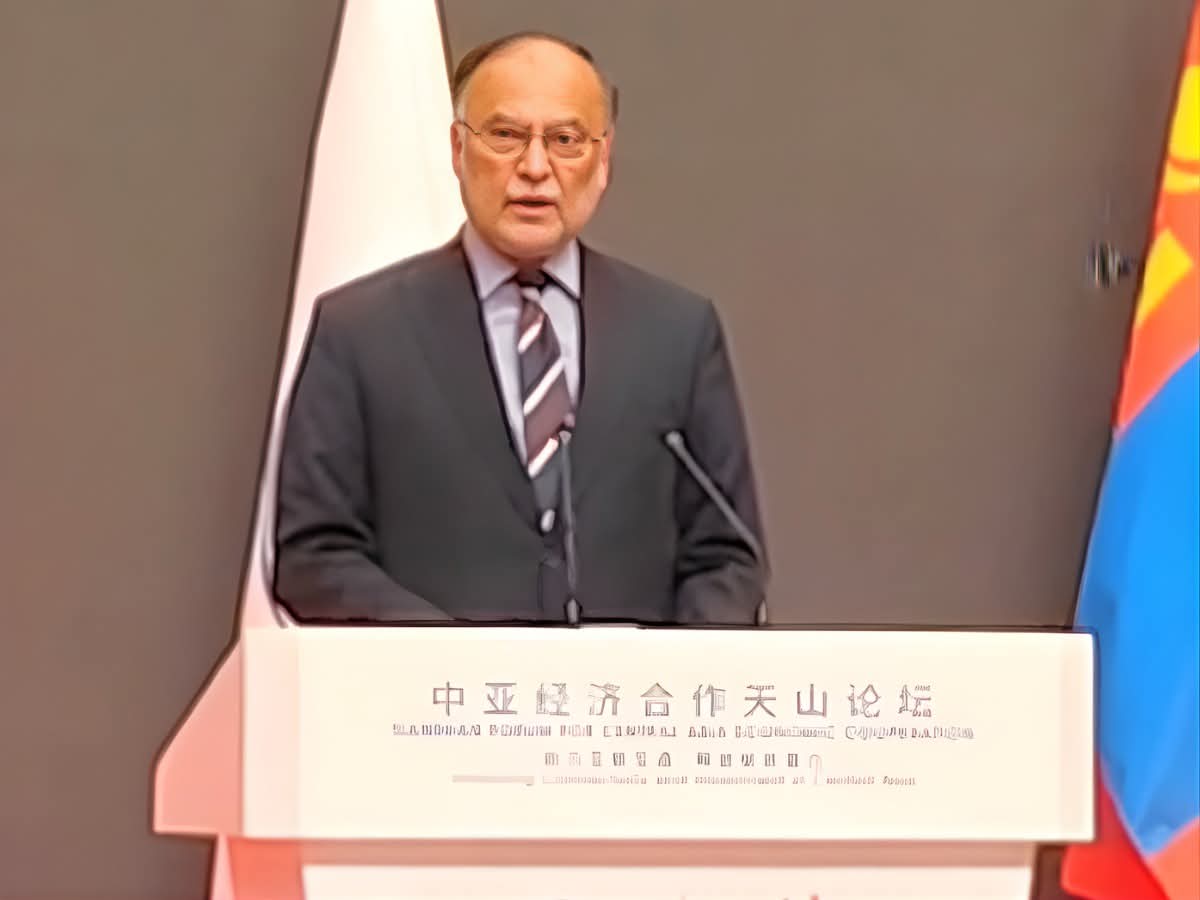
Federal Minister for Planning, Development & Special Initiatives, Prof. Ahsan Iqbal, delivered a keynote address at the inaugural Tianshan Forum on Central Asia Economic Cooperation in Urumqi, calling for a bold new era of regional connectivity, geo-economic integration, and shared prosperity across Eurasia.
Speaking before ministers, diplomats, scholars, and regional leaders, the Minister said the Tianshan region—historic gateway of the ancient Silk Road—must now lead the revival of a modern, interconnected Eurasian economy.
“This is not a peripheral region; this is the heartland of the world’s future,” he said, emphasizing the strategic potential of China, Central Asia, and South Asia, home to 3.9 billion people and a combined GDP exceeding USD 25 trillion.
Quoting President Xi Jinping, he reiterated: “Development is the master key to solving all problems,” adding that the Tianshan Forum embodies this principle by placing development at the centre of regional cooperation.
The Minister underscored Pakistan’s shift from geopolitics to geo-economics, positioning the country as the most efficient and reliable connectivity hub linking Central Asia, China, the Middle East, and global markets.
He noted that Gwadar Port provides Central Asian states the shortest, fastest, and most cost-effective access to the sea, reducing maritime access time by up to 70%.
“Pakistan’s location is not just strategic—it is a solution,” he stated, inviting Central Asian countries to leverage Pakistan’s ports, infrastructure, and industrial base for expanded global outreach.
Highlighting the China–Pakistan Economic Corridor (CPEC) as a flagship of the Belt and Road Initiative (BRI), the Minister noted that CPEC has added 8,000 MW to Pakistan’s power generation; Developed over 1,000 km of modern motorways; Operationalized Gwadar Port and Created a foundation for industrial zones, digital corridors, and energy cooperation
“CPEC demonstrates what long-term vision, mutual trust, and shared benefit can achieve,” he said.
He noted that BRI, CPEC, and the CAREC framework are “mutually reinforcing highways of opportunity” capable of transforming Eurasia into the world’s most dynamic economic belt.
Pakistan announced a four-part cooperation blueprint to unlock regional economic potential:Joint Task Force on Connectivity & Trade Integration ;Regional Special Economic Zones (R-SEZs); Eurasian Energy & Green Transition Partnership and Digital Silk Road & Future Skills Alliance
These proposals, he said, are “actionable, scalable, and aligned with the BRI, CPEC, and CAREC frameworks.”
The Minister emphasized the need for collective responses to climate change, energy insecurity, technological disruption, and development financing gaps.
He highlighted Pakistan’s support for China’s Global Development Initiative, Global Security Initiative, and Global Civilization Initiative, noting that these frameworks offer “equitable, inclusive, and development-centered pathways for global cooperation.”
Concluding his address, the Minister said:
“If we choose connectivity over isolation and long-term vision over short-term interests, our region can become the strategic economic centre of the world.”
He reaffirmed Pakistan’s commitment to deepening cooperation with China, Central Asian partners, and CAREC institutions, stating that Pakistan stands “ready, committed, and optimistic” about the shared future of Eurasia.
Federal Minister for Planning, Development & Special Initiatives, Prof. Ahsan Iqbal, delivered a keynote address at the inaugural Tianshan Forum on Central Asia Economic Cooperation in Urumqi, calling for a bold new era of regional connectivity, geo-economic integration, and shared prosperity across Eurasia.
Speaking before ministers, diplomats, scholars, and regional leaders, the Minister said the Tianshan region—historic gateway of the ancient Silk Road—must now lead the revival of a modern, interconnected Eurasian economy.
“This is not a peripheral region; this is the heartland of the world’s future,” he said, emphasizing the strategic potential of China, Central Asia, and South Asia, home to 3.9 billion people and a combined GDP exceeding USD 25 trillion.
Quoting President Xi Jinping, he reiterated: “Development is the master key to solving all problems,” adding that the Tianshan Forum embodies this principle by placing development at the centre of regional cooperation.
The Minister underscored Pakistan’s shift from geopolitics to geo-economics, positioning the country as the most efficient and reliable connectivity hub linking Central Asia, China, the Middle East, and global markets.
He noted that Gwadar Port provides Central Asian states the shortest, fastest, and most cost-effective access to the sea, reducing maritime access time by up to 70%.
“Pakistan’s location is not just strategic—it is a solution,” he stated, inviting Central Asian countries to leverage Pakistan’s ports, infrastructure, and industrial base for expanded global outreach.
Highlighting the China–Pakistan Economic Corridor (CPEC) as a flagship of the Belt and Road Initiative (BRI), the Minister noted that CPEC has added 8,000 MW to Pakistan’s power generation; Developed over 1,000 km of modern motorways; Operationalized Gwadar Port and Created a foundation for industrial zones, digital corridors, and energy cooperation
“CPEC demonstrates what long-term vision, mutual trust, and shared benefit can achieve,” he said.
He noted that BRI, CPEC, and the CAREC framework are “mutually reinforcing highways of opportunity” capable of transforming Eurasia into the world’s most dynamic economic belt.
Pakistan announced a four-part cooperation blueprint to unlock regional economic potential:Joint Task Force on Connectivity & Trade Integration ;Regional Special Economic Zones (R-SEZs); Eurasian Energy & Green Transition Partnership and Digital Silk Road & Future Skills Alliance
These proposals, he said, are “actionable, scalable, and aligned with the BRI, CPEC, and CAREC frameworks.”
The Minister emphasized the need for collective responses to climate change, energy insecurity, technological disruption, and development financing gaps.
He highlighted Pakistan’s support for China’s Global Development Initiative, Global Security Initiative, and Global Civilization Initiative, noting that these frameworks offer “equitable, inclusive, and development-centered pathways for global cooperation.”
Concluding his address, the Minister said:
“If we choose connectivity over isolation and long-term vision over short-term interests, our region can become the strategic economic centre of the world.”
He reaffirmed Pakistan’s commitment to deepening cooperation with China, Central Asian partners, and CAREC institutions, stating that Pakistan stands “ready, committed, and optimistic” about the shared future of Eurasia.