
Islamabad, January 13
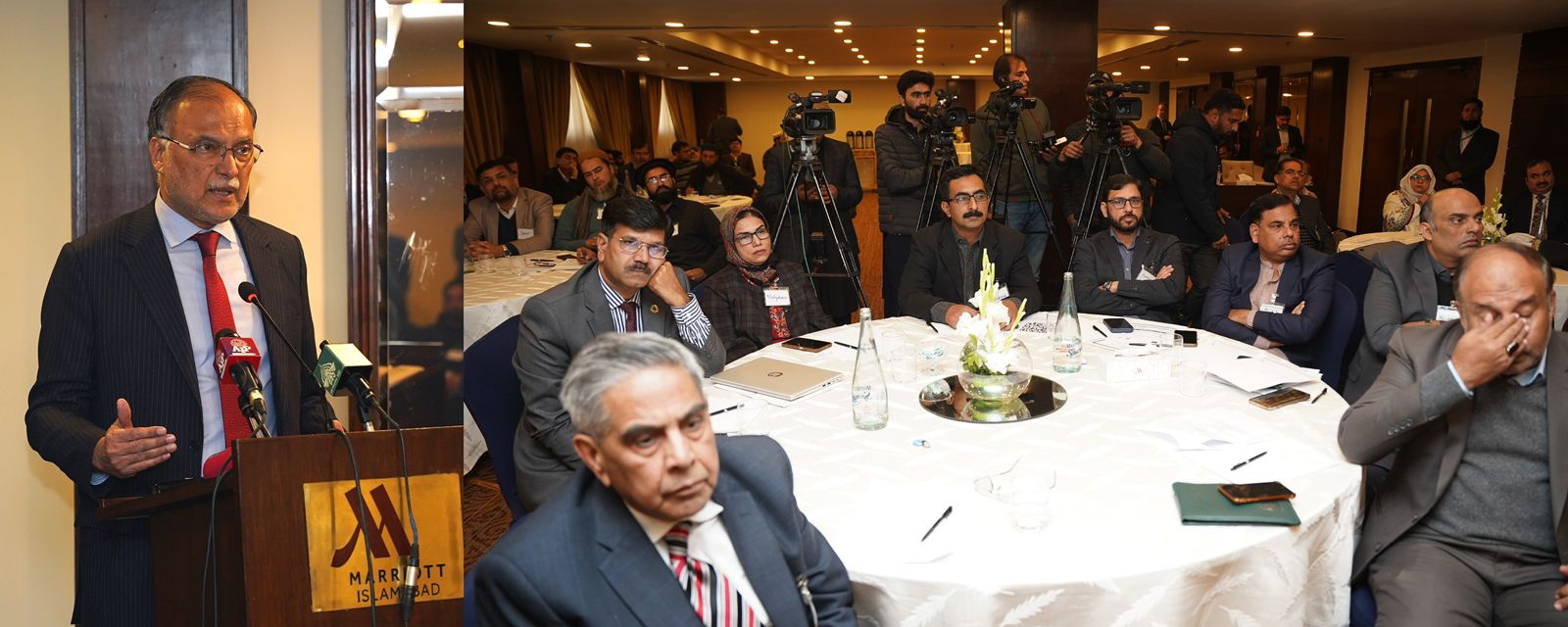
The first meeting of the Task Force on National Water Security was held under the chairmanship of Federal Minister for Planning, Development and Special Initiatives, Professor Ahsan Iqbal. Federal Minister for Water Resources, Mian Muhammad Moeen Wattoo, also attended the meeting. The session focused on Pakistan’s water challenges, rapid glacier melt, the impacts of climate change, and the formulation of a comprehensive national strategy to ensure water security.
During the meeting, the Federal Minister for Planning directed the establishment of a special Working Group under the Ministry of Water Resources and instructed that practical and actionable recommendations be finalized and submitted to the Planning Commission within fifteen days. He also directed that an immediate technical workshop be convened to translate water-related policies into implementable projects.
A briefing informed the meeting that in the Hindu Kush–Himalayan region, the rate of glacier melt has recorded a 65 percent increase over recent decades, particularly during the 2011–2020 decade. It was further briefed that the Siachen Glacier is melting at a rate of 50 to 60 meters annually, while glacier melt in the Himalayan mountain range has reached up to 30 meters per year.
Addressing the meeting, Professor Ahsan Iqbal stated that climate change has led to an alarming increase in glacier melt, and since 1960, 23 percent of glacier ice has already been lost. He warned that due to climate change, Pakistan faces the risk of a severe and long-term water crisis.
The Federal Minister emphasized that India’s suspension of the Indus Waters Treaty poses a serious threat to regional peace and Pakistan’s water rights, adding that India’s water aggression is aimed at pushing Pakistan into a water crisis. He noted that increasing uncertainty in river flows has emerged as a major risk for the country.
Professor Ahsan Iqbal stressed that water conservation is the guarantor of food security and economic stability. He underlined the need to strengthen coordination between the federation and provinces on the National Water Policy at all costs, stating that water security is not merely a sectoral issue but the foundation of national survival and sovereignty. He directed the Task Force not only to identify problems but also to propose immediate and practical solutions.
The meeting was informed that Pakistan derives 80 percent of its water from rivers, while growing population pressure has pushed the country toward severe water scarcity. The Federal Minister stated that, in view of population growth and climate change, the financial model for water management is being updated. He expressed concern that valuable freshwater is being polluted in rivers and wasted as it flows into the sea.
Professor Ahsan Iqbal said that one of the “Es” in the government’s Five Es framework specifically covers water conservation. He urged universities and water experts to jointly undertake planning for water security to enable evidence-based and sustainable decision-making.
He stated that the Task Force will play a key role in proposing effective solutions to Pakistan’s water challenges and that the construction of new dams has become an urgent national requirement. He added that Diamer-Bhasha and Mohmand Dams will prove to be milestones in increasing Pakistan’s water storage capacity.
The Federal Minister directed the Chairman WAPDA, IRSA, the National Flood Commission, and all provinces to provide their expert input to the Working Group. He ordered the formulation of a clear timeline to address the water crisis and emphasized that practical and actionable solutions must be presented, adding that mitigation of water-related challenges and risks will be undertaken on a priority basis.
The first meeting of the Task Force on National Water Security was held under the chairmanship of Federal Minister for Planning, Development and Special Initiatives, Professor Ahsan Iqbal. Federal Minister for Water Resources, Mian Muhammad Moeen Wattoo, also attended the meeting. The session focused on Pakistan’s water challenges, rapid glacier melt, the impacts of climate change, and the formulation of a comprehensive national strategy to ensure water security.
During the meeting, the Federal Minister for Planning directed the establishment of a special Working Group under the Ministry of Water Resources and instructed that practical and actionable recommendations be finalized and submitted to the Planning Commission within fifteen days. He also directed that an immediate technical workshop be convened to translate water-related policies into implementable projects.
A briefing informed the meeting that in the Hindu Kush–Himalayan region, the rate of glacier melt has recorded a 65 percent increase over recent decades, particularly during the 2011–2020 decade. It was further briefed that the Siachen Glacier is melting at a rate of 50 to 60 meters annually, while glacier melt in the Himalayan mountain range has reached up to 30 meters per year.
Addressing the meeting, Professor Ahsan Iqbal stated that climate change has led to an alarming increase in glacier melt, and since 1960, 23 percent of glacier ice has already been lost. He warned that due to climate change, Pakistan faces the risk of a severe and long-term water crisis.
The Federal Minister emphasized that India’s suspension of the Indus Waters Treaty poses a serious threat to regional peace and Pakistan’s water rights, adding that India’s water aggression is aimed at pushing Pakistan into a water crisis. He noted that increasing uncertainty in river flows has emerged as a major risk for the country.
Professor Ahsan Iqbal stressed that water conservation is the guarantor of food security and economic stability. He underlined the need to strengthen coordination between the federation and provinces on the National Water Policy at all costs, stating that water security is not merely a sectoral issue but the foundation of national survival and sovereignty. He directed the Task Force not only to identify problems but also to propose immediate and practical solutions.
The meeting was informed that Pakistan derives 80 percent of its water from rivers, while growing population pressure has pushed the country toward severe water scarcity. The Federal Minister stated that, in view of population growth and climate change, the financial model for water management is being updated. He expressed concern that valuable freshwater is being polluted in rivers and wasted as it flows into the sea.
Professor Ahsan Iqbal said that one of the “Es” in the government’s Five Es framework specifically covers water conservation. He urged universities and water experts to jointly undertake planning for water security to enable evidence-based and sustainable decision-making.
He stated that the Task Force will play a key role in proposing effective solutions to Pakistan’s water challenges and that the construction of new dams has become an urgent national requirement. He added that Diamer-Bhasha and Mohmand Dams will prove to be milestones in increasing Pakistan’s water storage capacity.
The Federal Minister directed the Chairman WAPDA, IRSA, the National Flood Commission, and all provinces to provide their expert input to the Working Group. He ordered the formulation of a clear timeline to address the water crisis and emphasized that practical and actionable solutions must be presented, adding that mitigation of water-related challenges and risks will be undertaken on a priority basis.