
Islamabad, May 14:
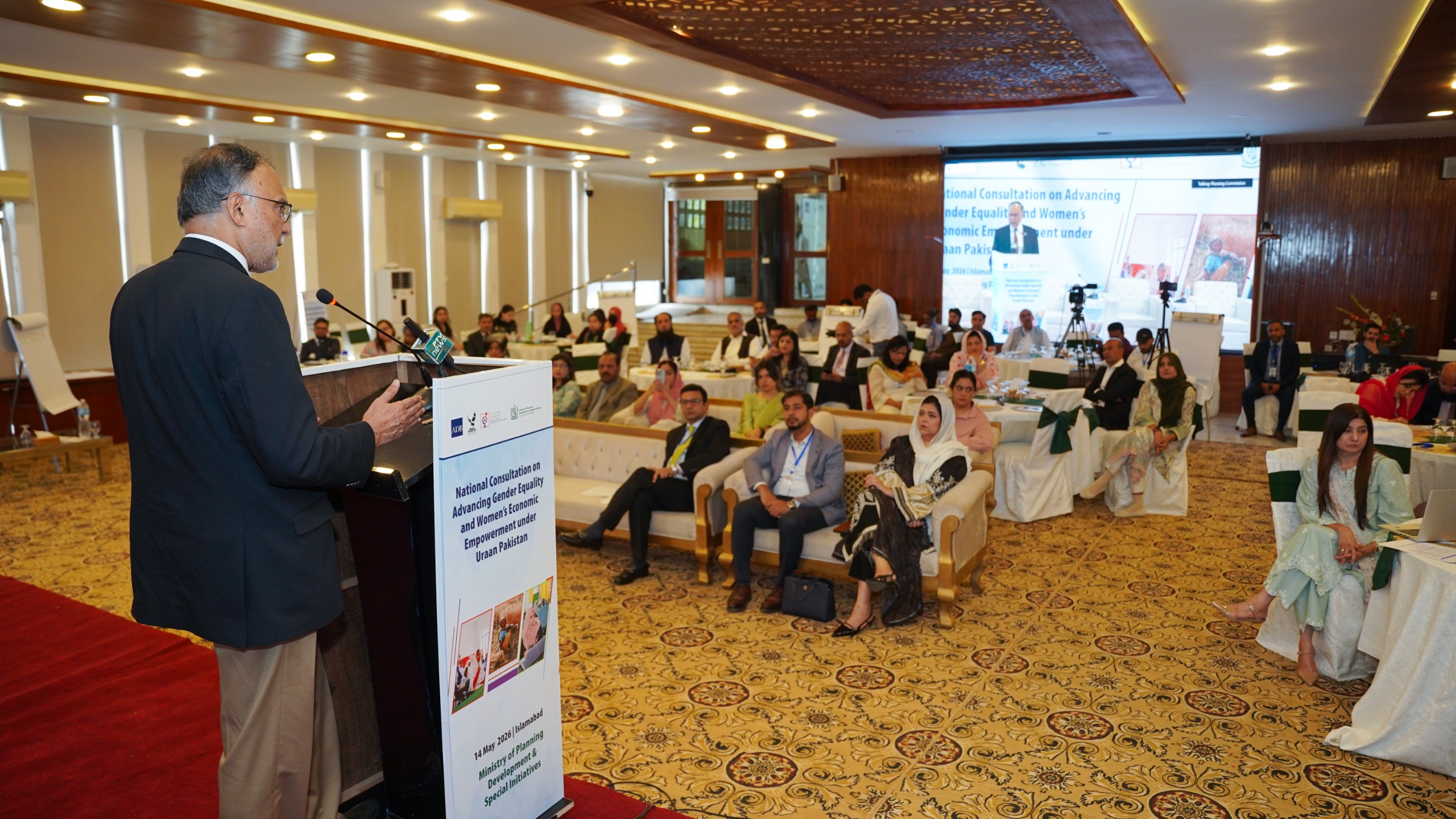
Addressing the National Consultation on Advancing Gender Equality and Women’s Economic Empowerment organized under “Uraan Pakistan” by the Gender Unit of the Ministry of Planning, Development and Special Initiatives, Federal Minister for Planning, Development and Special Initiatives Professor Ahsan Iqbal said that sustainable economic growth and social prosperity cannot be achieved unless women are provided equal opportunities to participate in every sphere of national development.
In his address, the Federal Minister said that empowering women is not merely a social responsibility but an essential economic necessity. He noted that Islamic history is filled with inspiring examples of women’s leadership in business and the economy, and said that Hazrat Khadija-tul-Kubra (RA) remains a role model for women as a successful entrepreneur and business leader.
Professor Ahsan Iqbal said that the fifth “E” of the government’s vision “Uraan Pakistan” is focused on empowering women and youth and making them active contributors to Pakistan’s social and economic progress.
The Federal Minister observed that Pakistani women are achieving remarkable success in education and professional fields. He stated that women are outperforming men in several competitive arenas, particularly civil service examinations and medical education.
Referring to the University of Narowal, he said that out of 7,000 students, 5,000 are women pursuing higher education and demonstrating outstanding academic performance.
He described education as “the greatest equalizer” and said that women’s education is the foundation for poverty reduction. The government, he added, is striving to ensure that every union council has a girls’ high school so that no girl is deprived of education because of distance or social barriers.
The Federal Minister said that university campuses are being established across districts to improve women’s access to higher education.
Professor Ahsan Iqbal also emphasized the need to improve women’s access to financial resources, including bank loans and microfinance facilities. He said that during 2013 -18 tenure, 50 percent of microcredit allocations under various schemes were reserved for women so they could start businesses and strengthen household economies.
Condemning gender discrimination and violence against women, he said such attitudes are unacceptable and are neither permitted by religion nor culture. He stated that Islam grants women full rights to education, business, and economic participation, while creating barriers in the name of religion reflects ignorance.
The Federal Minister said that the Ministry of Planning has launched awareness campaigns through Young Development Fellows to educate female university students in particular about their legal rights and the protections available under Pakistani law.
Professor Ahsan Iqbal said that women’s labor force participation exceeds 50 percent in successful countries around the world, whereas in Pakistan it currently stands at approximately 22 percent. He stressed that in order to unlock the country’s true economic potential, this ratio must be doubled in the short term.
He reaffirmed the government’s commitment under “Uraan Pakistan” to empower women, integrate them into the national mainstream, and ensure their equal participation in the development process as a core component of every development initiative. He expressed hope that the consultative session would provide practical recommendations for promoting women’s economic empowerment and gender equality.
Addressing the National Consultation on Advancing Gender Equality and Women’s Economic Empowerment organized under “Uraan Pakistan” by the Gender Unit of the Ministry of Planning, Development and Special Initiatives, Federal Minister for Planning, Development and Special Initiatives Professor Ahsan Iqbal said that sustainable economic growth and social prosperity cannot be achieved unless women are provided equal opportunities to participate in every sphere of national development.
In his address, the Federal Minister said that empowering women is not merely a social responsibility but an essential economic necessity. He noted that Islamic history is filled with inspiring examples of women’s leadership in business and the economy, and said that Hazrat Khadija-tul-Kubra (RA) remains a role model for women as a successful entrepreneur and business leader.
Professor Ahsan Iqbal said that the fifth “E” of the government’s vision “Uraan Pakistan” is focused on empowering women and youth and making them active contributors to Pakistan’s social and economic progress.
The Federal Minister observed that Pakistani women are achieving remarkable success in education and professional fields. He stated that women are outperforming men in several competitive arenas, particularly civil service examinations and medical education.
Referring to the University of Narowal, he said that out of 7,000 students, 5,000 are women pursuing higher education and demonstrating outstanding academic performance.
He described education as “the greatest equalizer” and said that women’s education is the foundation for poverty reduction. The government, he added, is striving to ensure that every union council has a girls’ high school so that no girl is deprived of education because of distance or social barriers.
The Federal Minister said that university campuses are being established across districts to improve women’s access to higher education.
Professor Ahsan Iqbal also emphasized the need to improve women’s access to financial resources, including bank loans and microfinance facilities. He said that during 2013 -18 tenure, 50 percent of microcredit allocations under various schemes were reserved for women so they could start businesses and strengthen household economies.
Condemning gender discrimination and violence against women, he said such attitudes are unacceptable and are neither permitted by religion nor culture. He stated that Islam grants women full rights to education, business, and economic participation, while creating barriers in the name of religion reflects ignorance.
The Federal Minister said that the Ministry of Planning has launched awareness campaigns through Young Development Fellows to educate female university students in particular about their legal rights and the protections available under Pakistani law.
Professor Ahsan Iqbal said that women’s labor force participation exceeds 50 percent in successful countries around the world, whereas in Pakistan it currently stands at approximately 22 percent. He stressed that in order to unlock the country’s true economic potential, this ratio must be doubled in the short term.
He reaffirmed the government’s commitment under “Uraan Pakistan” to empower women, integrate them into the national mainstream, and ensure their equal participation in the development process as a core component of every development initiative. He expressed hope that the consultative session would provide practical recommendations for promoting women’s economic empowerment and gender equality.