
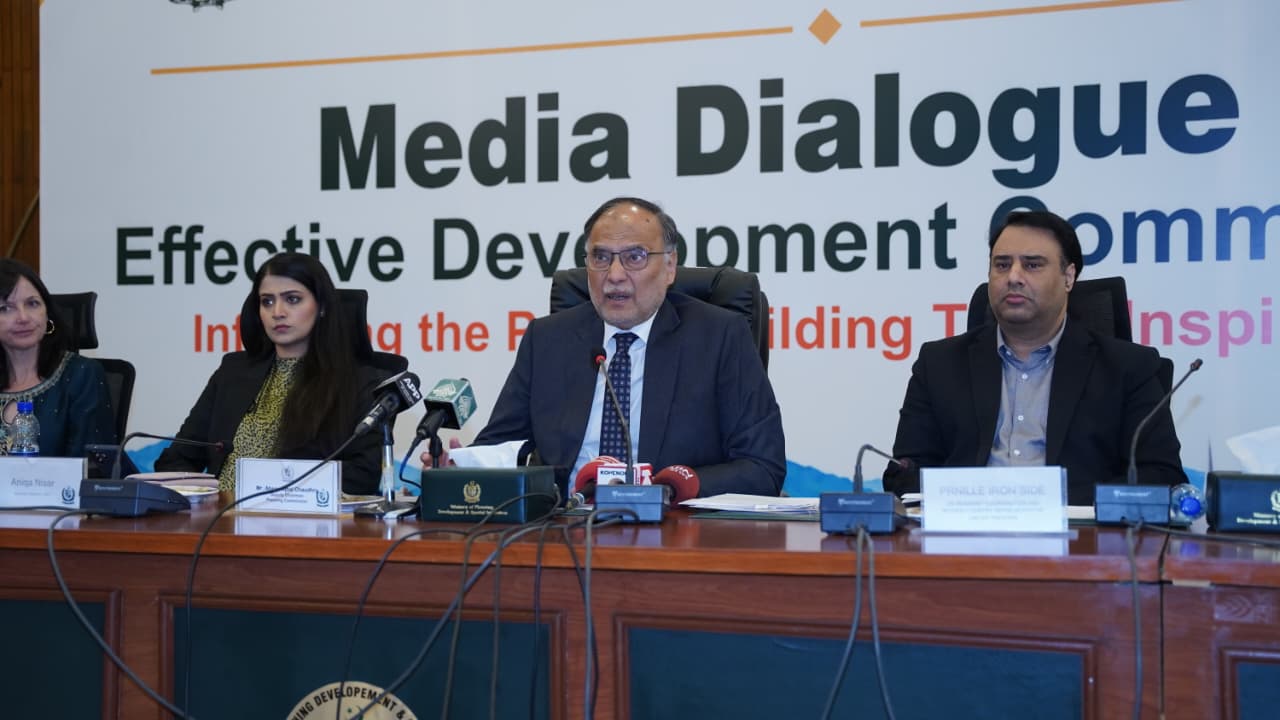
ISLAMABAD 6 Nov 2026: Federal Minister for Planning Ahsan Iqbal has called for a fundamental shift in Pakistan’s media and political discourse, urging media organizations to move beyond political controversies and sensationalism and give greater attention to the country’s pressing development issues and a national conversation focused on the development and positive interventions shaping Pakistan’s future.
Addressing a Media Dialogue on Media Literacy and Development Journalism, organized by the Ministry of Planning, Development and Special Initiatives, the Minister said that political disputes and controversies often dominate headlines within seconds, while critical issues affecting Pakistan’s future receive inadequate public and media attention.
The minister described the media as a stakeholder in Pakistan’s development and growth, saying its role extended to bringing social issues and development into public debate, examining development outcomes and highlighting initiatives that deliver tangible benefits to citizens.
He emphasized that Pakistan must prioritize fundamental development issues and positive interventions in the social sector, including education, human capital, child nutrition, population growth, women’s empowerment, economic sovereignty, food security and water management. He said media should also showcase development heroes.
He stressed that development journalism did not mean avoiding criticism. Media organisations should hold institutions and policymakers accountable, expose gaps in service delivery and examine whether public policies were improving people’s lives, but also report innovation, achievement and positive social change. Media needs to contribute towards behaviour change to partner in socio-economic development for the development of people.
Referring to international media practices, he said development issues needed a more prominent and sustained place on the public agenda. Pakistan’s future, he argued, required informed debate on human development and economic transformation alongside coverage of political events.
The minister identified education and child nutrition as urgent priorities, pointing to children who remain out of school and the lasting effects of stunting on physical growth, learning and future productivity. Early childhood development, quality schooling and adequate nutrition, he said, were investments in the country’s future workforce.
He warned that rapid population growth was increasing pressure on schools, healthcare, employment and essential resources, and stressed the importance of women’s empowerment and equal opportunities to participate in national development.
On the economy, Iqbal called for a shift from consumption-driven growth towards production, innovation and exports to strengthen Pakistan’s economic sovereignty. Water management, food security and public health concerns, including tobacco consumption and food adulteration, also required sustained attention and public awareness, he said.
He urged journalists to make these issues a continuing national conversation rather than occasional stories, helping citizens assess both development gaps and progress. Pakistan’s long-term prospects, he said, depended on collective commitment to human development, evidence-based policymaking and economic resilience.
The minister emphasized that journalism should go beyond reporting daily political developments and play a constructive role in shaping national priorities. He said the media must promote informed public debate and bring forward stories of innovation, achievement and positive social change.
Ahsan Iqbal said that constructive journalism means ensuring that criticism is informed, responsible and solution-oriented. He stressed that the media has a vital responsibility in building public awareness, strengthening national confidence and creating a development-focused narrative for Pakistan.
He urged media professionals to help redirect public attention towards issues that will determine Pakistan’s future, emphasizing that national progress requires a collective commitment to human development, economic transformation and evidence-based policy making.